THE SHORT ANSWER
For a simple starting recipe, use 15g of coffee and 250g of water, about a 1:16.7 ratio. Choose a cafetière for an easy, fuller-bodied brew or a paper-filter pour-over for a cleaner cup. Use fresh water, match the grind to the brewer and change one variable at a time. These are starting recipes, not rules for every coffee.
Your kitchen does not need to look like a coffee competition stage. You can make a proper cup at home with good beans, a straightforward brewer and a bit of attention. Start there before spending half your wages on equipment.
I'm Ali from Perception in South London. I want more people enjoying specialty coffee, not feeling like they need permission to get into it. Whether you drink yours before work or take your time on a Sunday, the aim is the same: a cup you actually want to finish.
What do you actually need to brew coffee at home?
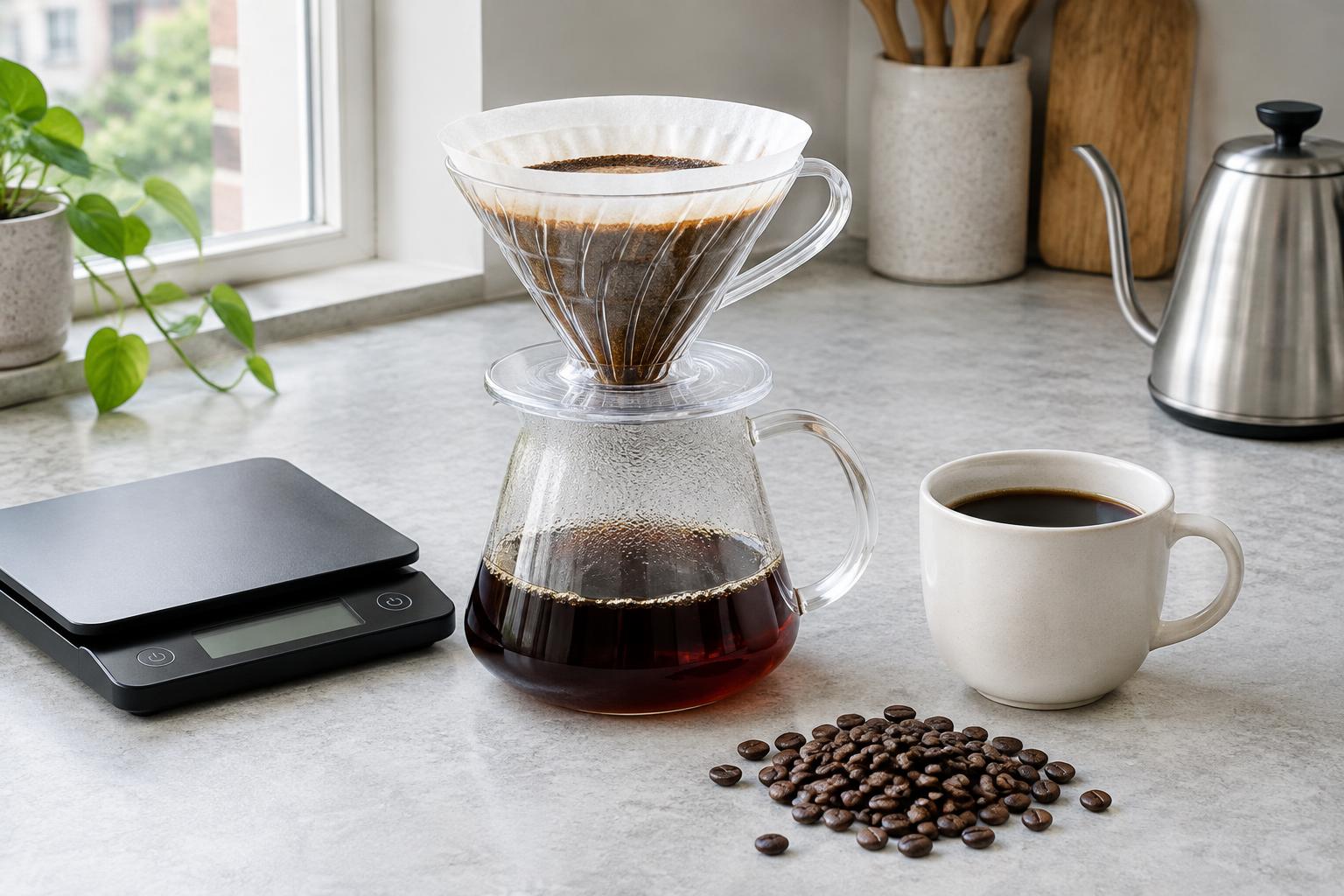
Start with a cafetière or a simple filter brewer, a kettle and coffee ground for that method. Basic kitchen scales are useful because weighing makes it easier to repeat a cup you like. A specialist gooseneck kettle is optional, not an entry requirement.
If you have a grinder, grind just before brewing. If you do not, ask for the right grind when buying coffee. A bag of well-chosen ground coffee is a better starting point than equipment you do not know how to use.
Coffee needs good storage, too. Keep it sealed in a cool, dry place away from light. Buy an amount you can realistically drink rather than filling a cupboard because the price per kilo looks good.
How much coffee should you use per cup?
My starting point here is 15g coffee to 250g water, or 60g per litre. That makes a useful one-person brew without getting too deep into the maths. The National Coffee Association also stresses that the ratio can be adjusted to your taste and brewing method.
For two cups, start with 30g coffee and 500g water. Keep the ratio steady while you learn what your grind and brewer are doing. Want a stronger cup? Increase the coffee a little. Want a lighter one? Use a little less.
For these filter recipes, try water around 93°C as a starting point. If you have no temperature control, let a freshly boiled kettle settle briefly. Water temperature is one variable, not a magic number that makes every roast taste right.
An easy cafetière recipe for one
This is a forgiving place to start. Expect more body than a paper-filter brew, and a little sediment is normal.
- Warm the cafetière, then empty the warming water.
- Add 15g of coarsely ground coffee and place the brewer on a stable surface.
- Add 250g of hot water and stir gently so the grounds are wet.
- Put the lid on and leave it for about four minutes as a starting point.
- Press slowly without forcing the plunger. Pour the coffee out rather than leaving it sitting with the grounds.
- Taste it. Next time, change the grind or steep time slightly if you want a different result.
A simple pour-over recipe for a cleaner cup
A paper filter can bring out clarity in a coffee's fruit and floral character. You do not need a perfect pouring spiral to get started.
- Put a paper filter in the brewer, rinse it with hot water and discard the rinse water.
- Add 15g of medium-ground coffee. Set the brewer over a stable cup or server.
- Pour about 40g of water over the coffee and wait around 30 seconds.
- Add the remaining water in two or three gentle pours, reaching 250g in total.
- Let it drain. Around three minutes overall is a useful starting point, not a pass-or-fail test.
- Taste before changing anything. Different papers, grinders and coffees will change the drawdown.
Why does home coffee taste sour, bitter or weak?
If a cup is sharply sour and thin, try a slightly finer grind or more contact time. If it is harsh, drying or bitter, try a slightly coarser grind or less contact time. Those are troubleshooting directions, not diagnoses: the roast, water and coffee itself can also change what you taste.
If it simply feels weak, check your dose and water amount first. If the flavour is muted or odd, try fresh drinking water and clean the brewer. Old coffee oils can spoil a fresh brew.
Change one thing, then taste again. Otherwise you are chasing three moving targets and wondering why yesterday's cup disappeared.
Which Perception coffee should you start with?
Go by what sounds good to you, not what someone says a serious coffee drinker should like. Colombia La Viña Natural has listed notes of red apple, strawberry, lemon and caramel. Costa Rica Finca Reina Elizabeth has nectarine, forest berries and florals.
If you want something more expressive, Ethiopia Idido · Floral Funk has listed notes of candy floss, summer berries, vanilla and black tea. Colombia El Jaragual Rosado brings mango, passionfruit and strawberry ice cream notes. Tasting notes describe flavour impressions, not added ingredients.
Our shop lets you preview a coffee and a grind preference. That selection does not place an order. Membership ordering will come later.
What does a home-brewed cup actually cost?
At a 15g dose, a 200g bag gives you 13 full brews with 5g left. Using the launch member coffee prices of £4.10 to £5.20, the coffee used in one 15g brew works out at about 31p to 39p.
That is the bean cost only. It excludes the £35 monthly membership, delivery, filters, water, energy and equipment. If you want an honest cost per cup, add the relevant monthly costs and divide by the cups you actually drink.
The best home coffee setup is one you use. Get the basics right, learn what you like and upgrade only when you know what problem you are trying to solve. Good coffee should fit into your life, not take it over.
Questions, answered
Can I brew specialty coffee without an espresso machine?
Yes. A cafetière or paper-filter brewer is enough to make specialty coffee at home. Match the grind to the method and start with a repeatable dose and water amount.
What is a good coffee-to-water ratio for beginners?
For the recipes here, start with 15g coffee and 250g water, about 1:16.7. Adjust to taste. Espresso and other methods need different recipes.
How many cups can I make from a 200g bag?
At 15g per brew, a 200g bag makes 13 full brews with 5g remaining. Your yield changes if you use a different dose.
Sources & further reading
- National Coffee Association: home brewing fundamentals ↗
- Coffee Nerds: beginner ratios and brewing guidance ↗
Perception prices and launch terms are from our published collection. Checked 13 October 2026. Brewing recipes are starting suggestions, not a guarantee of a particular result.
A different perspective on your daily cup.
Four launch coffees. £35 monthly membership. Coffee paid separately. Up to 10 bags a month.
Explore founding membership See the coffee