THE SHORT ANSWER
Fairtrade coffee is coffee certified against Fairtrade standards, including a Minimum Price safety net and an additional Premium. Paying farmers properly also means asking what producers receive, what production costs them and whether their income supports a decent life. A label or a high UK retail price cannot answer all of that on its own.
Good coffee starts with someone else's work. Before it reaches a roaster in South London, someone has grown it, picked it and taken the risk of another harvest. That person deserves more than a nice paragraph on the back of a bag.
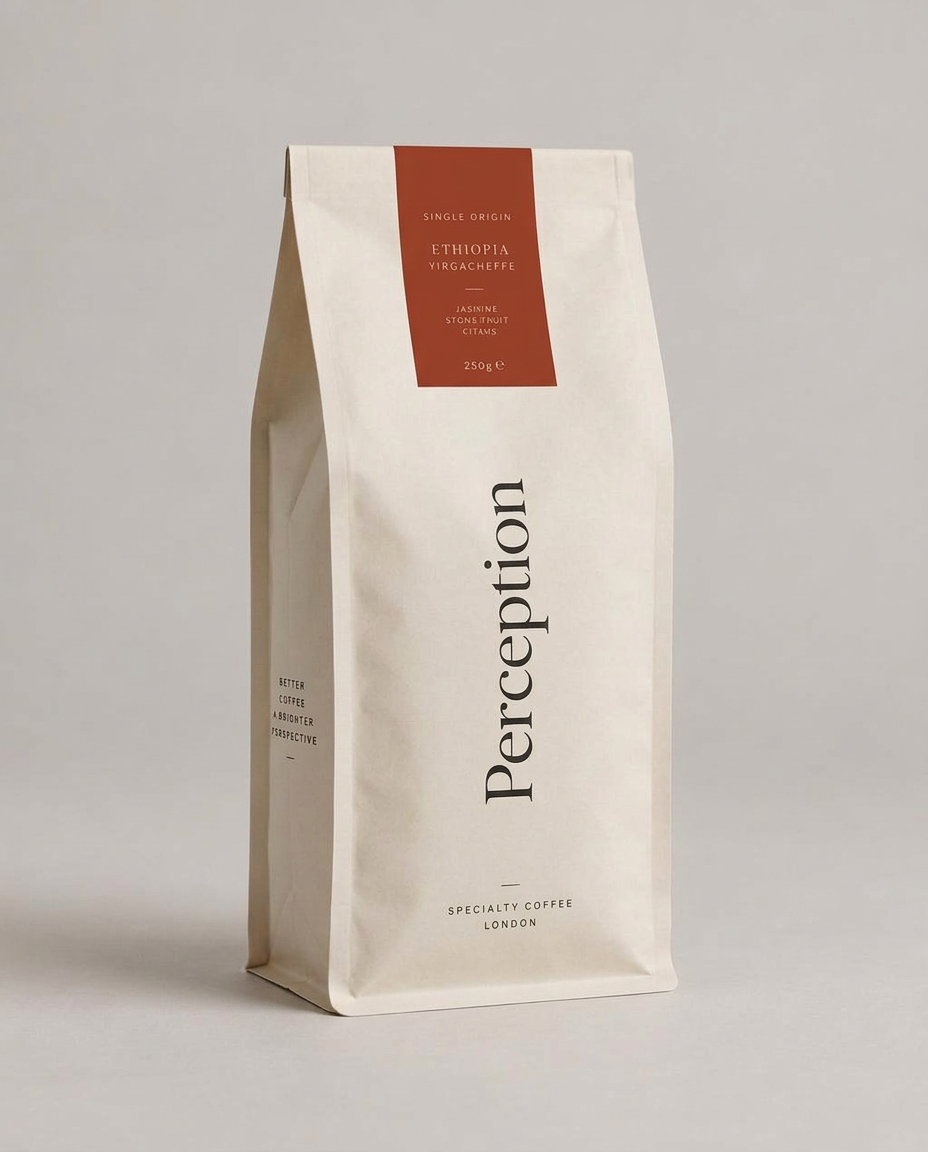
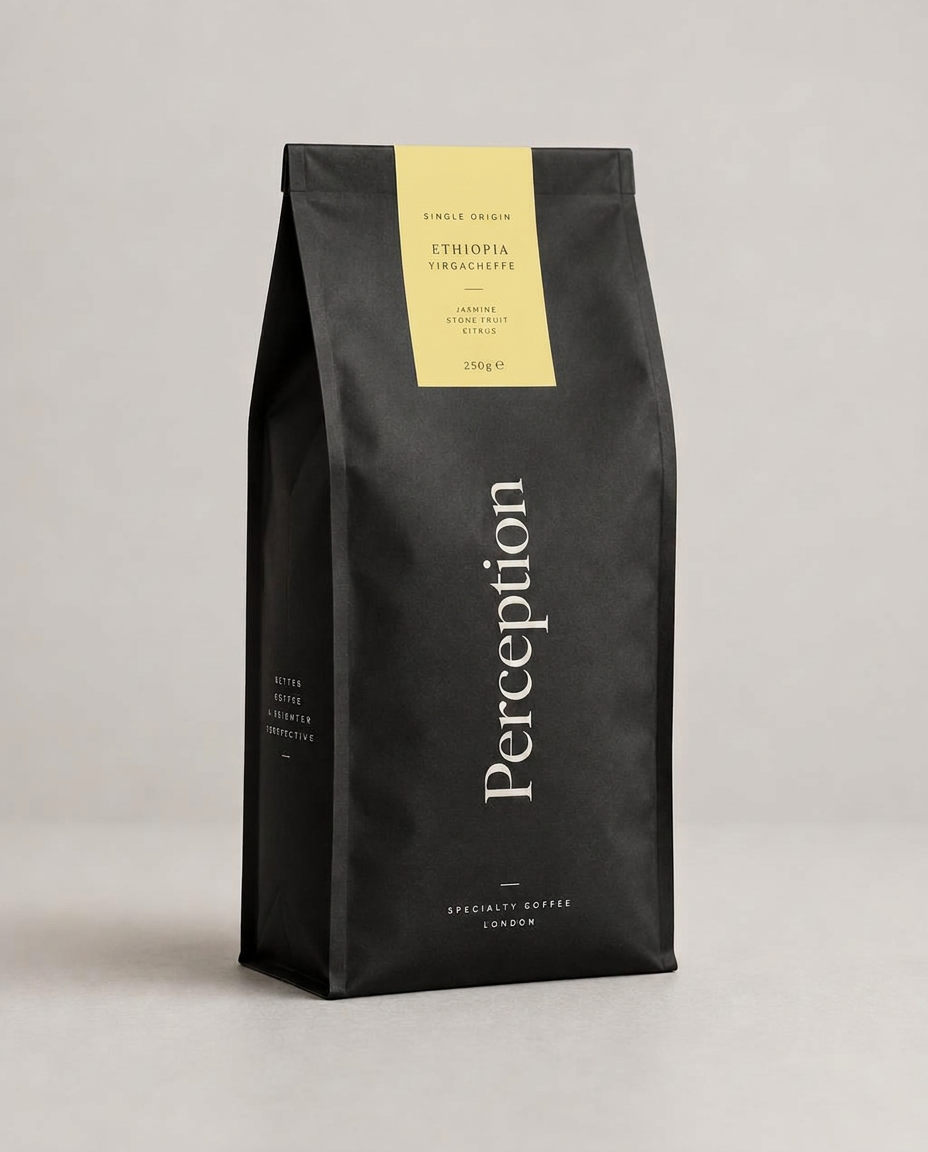
I'm Ali, founder of Perception. Coming from Brixton, I want the conversation about coffee to be straight. If we say a coffee is fair, we should be able to explain fair to whom, and show what we actually know. Not just dress it up and hope nobody asks.
What does Fairtrade coffee actually mean?
Fairtrade, written as one word, is a specific certification system. The Fairtrade Foundation explains that its Minimum Price provides a safety net against falling market prices. Its Premium is an extra payment that producer organisations can invest in projects they choose, including improving coffee production and community services.
That matters. Farmers need ways to plan beyond the next market swing. But fair trade, written as two words, can also mean a general commitment to fairer trading. The two are not interchangeable. Calling a coffee ethical does not make it Fairtrade-certified.
The question I care about: what reaches the farmer?
A £15 bag in London does not tell you what a grower earned. Neither does a beautiful farm photograph. To understand producer pay, you need to know which price a roaster is sharing.
Farm-gate price is the amount paid to the farmer or producing group before export costs. FOB, short for Free On Board, is the export price when coffee is loaded onto a ship. A roaster's landed cost can include shipping, storage, finance and an importer's margin. Those are different numbers, not three ways of saying the same thing.
Even a farm-gate figure needs context. Which harvest? What currency? Is the farmer selling cherry, dried coffee or processed green coffee? Without that detail, comparisons can look tidy and still tell you very little.
A better price is not automatically a living income
Paying above a benchmark sounds good. The next question is whether that payment covers the producer's costs and leaves something meaningful after them. Labour, fertiliser, processing, farm maintenance and a bad harvest do not disappear because the cup tastes brilliant.
A living income is about a household being able to afford a decent standard of living. It is not simply a premium attached to a particular lot. The cost of production and household circumstances vary, so I would rather ask proper questions than pretend one percentage proves everything.
Importers and cooperatives can do important work here. Working through an importer is not automatically unfair, and the phrase direct trade is not proof of a better outcome. Evidence matters more than the slogan.
Where Perception stands, without the big claims
Our launch collection names producers or producing groups, origins and importers. Colombia La Viña Natural, for example, is credited to William Sepúlveda, with Muscox Colombian Coffee listed as the importer. Naming the people involved is a starting point, not proof of what they were paid.
We are not presenting the launch coffees as Fairtrade-certified. We are also not publishing verified farm-gate payment figures or claiming that buying a bag guarantees a farmer a living income. I want fair producer pay to be part of the conversation, but I will not turn missing evidence into a marketing claim.
The member prices on our site describe our coffee pricing model. They are not the price paid to a farmer. Keeping those things separate is part of being honest with you.
Five questions to ask any coffee roaster
You do not need to become a supply-chain expert. Start here:
- Is this particular coffee Fairtrade-certified, or are you describing a broader sourcing approach?
- Who produced it, and who handled the import?
- Is the price you publish farm-gate, FOB or landed cost?
- Do you know the producer's cost of production, and what evidence supports your pay claims?
- What do you know for certain, and what are you still trying to find out?
Fair at both ends of the bag
Farmers should not be squeezed so coffee can look cheap. Customers should not be expected to pay a mystery premium because a brand looks expensive. Those are not opposing ideas.
For me, a better coffee business starts with respect for the people doing the work and respect for the person buying the bag. Clear information. Proper questions. Less noise. That is the perspective I want Perception to bring.
Questions, answered
Is Perception coffee Fairtrade-certified?
Perception is not claiming Fairtrade certification for its launch collection. The catalogue identifies producers or producing groups and importers, but does not currently publish verified farm-gate payment figures.
Does expensive coffee mean farmers are paid more?
Not necessarily. Retail prices also reflect roasting, packaging, distribution and business costs. To assess farmer pay, ask for the farm-gate price and its context, rather than relying on the shelf price.
Is direct trade better than Fairtrade?
Neither phrase alone proves a better outcome for every producer. Fairtrade is a certification system; a direct-trade claim needs evidence about the actual relationship, payments and producer costs.
Sources & further reading
- Fairtrade Foundation: coffee, the Minimum Price and Premium ↗
- Roastworks: farm-gate, FOB and landed coffee prices ↗
Perception prices and launch terms are from our published collection. Checked 13 October 2026. Brewing recipes are starting suggestions, not a guarantee of a particular result.
A different perspective on your daily cup.
Four launch coffees. £35 monthly membership. Coffee paid separately. Up to 10 bags a month.
Explore founding membership See the coffee